Brain Signals in Appetite Awareness
Basic neurophysiological overview of appetite regulation systems
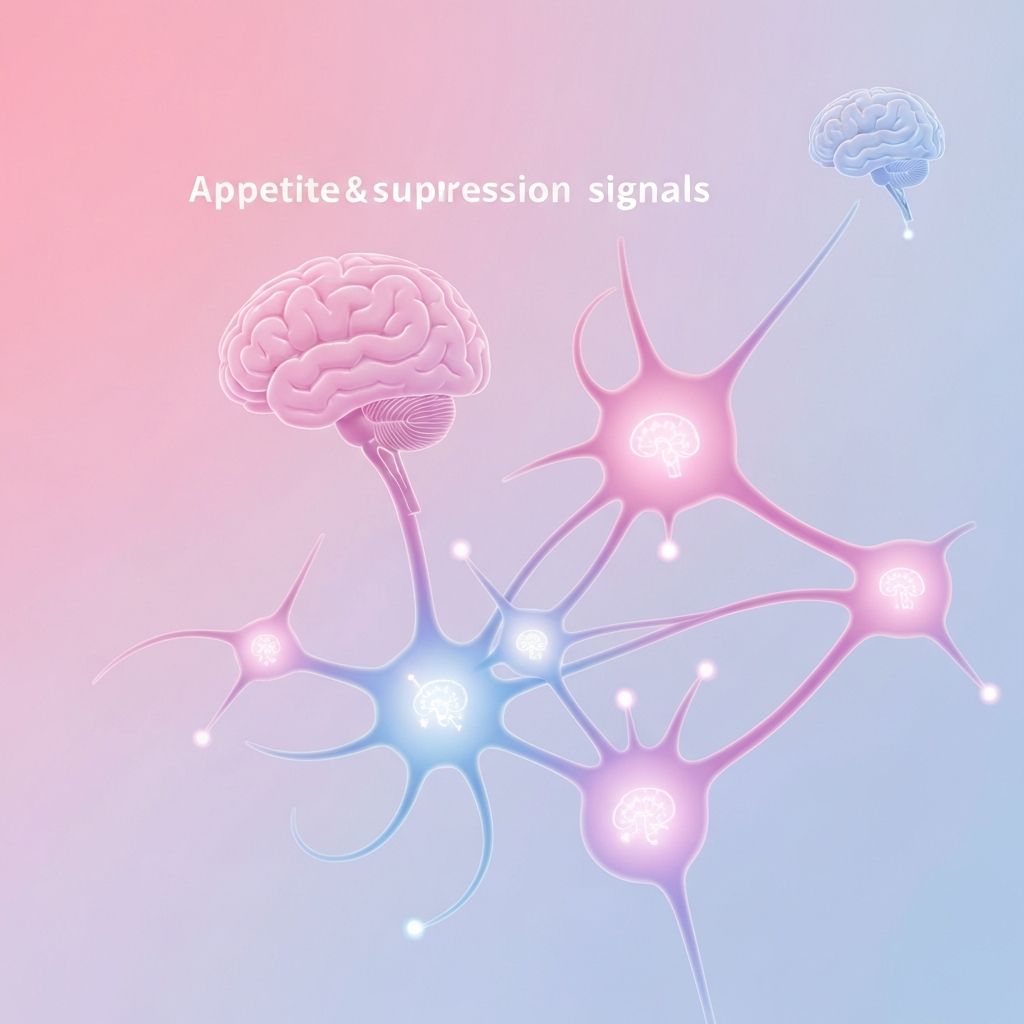
The Neurophysiology of Appetite and Appetite Suppression
Appetite regulation emerges from integrated neural and hormonal systems. The brain receives continuous information about energy status, nutrient availability, and digestive state. This information is processed through multiple brain regions and neurotransmitter systems to generate hunger or satiation signals.
The Hypothalamus as Appetite Control Center
The hypothalamus, a small brain structure at the base of the brain, serves as the central integration point for appetite signals. Different regions of the hypothalamus have distinct functions. The lateral hypothalamus, sometimes called the "hunger center," responds to hunger signals and initiates feeding behavior. The ventromedial hypothalamus, sometimes called the "satiety center," processes fullness signals and suppresses appetite.
These regions do not operate independently but rather integrate information from multiple sources. Damage to specific hypothalamic regions can substantially alter appetite and feeding behavior, demonstrating the critical role of these structures.
Hormonal Appetite Signals
Hormones communicate nutritional status to the brain's appetite centers. Ghrelin, produced in the stomach and small intestine, signals energy deficit and stimulates appetite when its levels are elevated. Leptin, produced by fat tissue, signals energy abundance and suppresses appetite when present at normal levels. These hormones act through specific receptors in the hypothalamus.
Insulin, released when blood glucose rises, communicates nutrient availability and influences both peripheral and brain appetite centers. Thyroid hormones influence overall metabolic rate and appetite. Growth hormone and cortisol also modulate appetite through actions on the brain.
Gut Hormones and the Gut-Brain Axis
The gastrointestinal tract produces multiple appetite-suppressing hormones. Cholecystokinin (CCK), released from small intestinal cells in response to dietary fat and protein, signals satiation. Peptide YY (PYY), released from colonic cells in response to nutrient absorption, suppresses appetite. Glucagon-like peptide-1 (GLP-1), produced in the intestines, promotes satiation.
These intestinal signals reach the brain through two pathways: the vagal pathway (direct neural connection via the vagus nerve) and the bloodstream (hormonal pathway). The vagus nerve transmits rapid signals about gastric fullness and nutrient composition. Hormonal signals provide more sustained appetite suppression.
The Gut Microbiota and Appetite
The trillions of microorganisms inhabiting the gastrointestinal tract produce metabolites and hormones that influence host appetite and metabolism. Short-chain fatty acids produced from dietary fiber influence satiation signals. Some bacteria influence production of appetite-regulating hormones. The composition of gut bacteria varies among individuals and may influence appetite differences.
Neurotransmitter Systems
Multiple neurotransmitter systems regulate appetite. Dopamine is involved in reward perception and food motivation. Serotonin influences mood and appetite suppression. Neuropeptide Y (NPY) stimulates appetite, while alpha-melanocyte-stimulating hormone (α-MSH) suppresses appetite. These neurotransmitters work in concert, often in opposition, to regulate net appetite drive.
Endocannabinoids, endogenous compounds similar to those in cannabis, influence appetite and reward from eating. Opioid peptides contribute to pleasure from eating. These systems evolved to enhance feeding during times of food availability and suppress feeding during times of abundance.
Circadian Regulation of Appetite
Appetite hormones follow circadian (24-hour) rhythms. Ghrelin typically rises before habitual meal times and falls after eating. Leptin shows circadian variation related to sleep-wake cycles. Cortisol, a stress hormone that influences appetite, follows a circadian pattern with higher levels in early morning.
Disruption of circadian rhythms—through shift work, jet lag, or poor sleep—can disrupt appetite regulation. This explains increased appetite and altered food preference during circadian misalignment.
Integration of Sensory Information
The brain integrates sensory information about food—taste, smell, texture, visual appearance—with hormonal signals from the body. This integrated assessment determines whether eating continues or stops. Novel sensory experiences can enhance appetite ("sensory-specific satiation" is delayed for new foods), while familiar foods may produce more rapid satiation.
Emotional and Stress Influences
Stress hormones—cortisol and adrenaline—alter appetite regulation. Acute stress often suppresses appetite, while chronic stress can increase appetite and preference for high-calorie foods. Emotional states influence hypothalamic function and neurotransmitter activity, directly affecting appetite.
The amygdala and prefrontal cortex, brain regions involved in emotional processing and decision-making, interact with appetite centers to influence food choice and eating motivation.
Individual Differences in Appetite System Sensitivity
Genetic variation creates differences in appetite sensitivity. Some individuals have naturally lower leptin sensitivity or higher NPY signaling, resulting in reduced appetite suppression. Others show high sensitivity to satiation signals. Medications, hormonal status, and metabolic conditions alter appetite regulation.
Age-related changes in appetite hormones and brain sensitivity to these hormones explain altered appetite in older adults. Sex hormones influence appetite—estrogen generally suppresses appetite, while androgens may enhance it.
Learning and Conditioned Appetite
The brain learns associations between food cues and consequences. Repeated pairing of specific environmental cues with eating creates conditioned appetite responses. The presence of these cues triggers appetite even without physical hunger. This learned system is powerful and sometimes operates against physiological satiation signals.
Educational Context
This article presents basic information about the neurobiology of appetite regulation. The systems described are complex and interact in ways not yet fully understood. Individual variation in appetite neurobiology is substantial. This information is educational and provides general knowledge about how the nervous system regulates appetite. It does not constitute guidance for personal appetite management.
Interested in related topics?
Explore More Articles